article / August 11, 2026
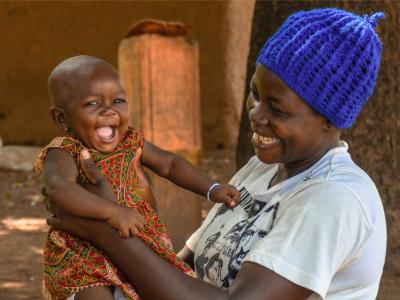
World Breastfeeding Week: For Aminata Luse, Breast Milk Changed Her Child’s Story
This article tells the story of Aminata Luse, a mother of three from Biaboko, whose experience with exclusive breastfeeding transformed the health and well-being of her third child. After facing frequent illnesses with her first two children, Aminata joined an Infant and Young Child Feeding (IYCF) support group, where she learnt about the importance of the first 1,000 days and the benefits of exclusive breastfeeding. The story highlights how nutrition education, community-based support and practical guidance can empower mothers to adopt healthier feeding practices and improve outcomes for their children. It also showcases World Vision’s work, with support from KOICA and the World Food Programme, to promote good infant and young child feeding practices in Luiza and Luambo health zones.
article / August 5, 2026
Breastfeeding for a Sustainable Start in Life
Discover how World Vision's Care Groups and MenCare approach strengthen breastfeeding support in Kenya, helping families give children the best start.
article / August 2, 2026
Giving Every Child the Best Start: Strengthening Breastfeeding Support in Cambodia
Discover how World Vision Cambodia is strengthening breastfeeding support through Baby-Friendly Health Centres, helping every mother and child get the best start in life.
article / August 5, 2026
Walking the Talk: My Personal Breastfeeding Journey
A World Vision gender specialist shares how family support, rest, and good nutrition helped her overcome breastfeeding challenges and nourish her son.
article / August 6, 2026
Breastfeeding: Finding Confidence, Connection and a Better Start
With support from the Go Baby Go programme, Tharaa embraced motherhood with confidence, strengthening her bond with her baby.
article / August 10, 2026
DR Congo: Growing Health: How William Is Cultivating a Healthier Future for His Children
William, a father of eight from Ntompo in Kasaï Central, is challenging traditional gender roles around childcare and nutrition. Through a KOICA-funded project implemented by World Vision in partnership with WFP, he learned about positive masculinity and the importance of shared responsibility for family well-being. Today, William works alongside his wife in their family garden, helps make decisions about their children’s meals and supports their health and nutrition. His story shows how engaging men can strengthen families, improve children’s diets and inspire lasting behavioural change within communities.
video / August 14, 2026
Chapemba Rural Health Post Brings Hope to Women and Children
Built with support from World Vision UK, Chapemba Rural Health Post now stands ready to serve the community. The new facility includes two staff houses, a water mechanisation system, and an ablution block, giving health workers a place to live and mothers and children a place close to home for care.
video / August 14, 2026
With Proper Infrastructure, Health Workers Are Motivated to Provide Quality Services
Diana Mubanga serves as nurse-in-charge at Chapemba Rural Health Post, built by World Vision Zambia with support from World Vision UK. Since receiving new facilities, Diana and her team feel encouraged to deliver quality care to families in the community. Good infrastructure gives health workers dignity, safety, and confidence, and patients notice the difference.
press release / August 12, 2026
World Vision Malawi Statement on the Global Fund OIG Audit
World Vision Malawi acknowledges the Global Fund OIG audit findings on a US$33 million malaria grant, identified non-compliant expenditure of US$125,901, recovered affected funds, dismissed implicated staff, strengthened controls, and remains committed to transparency, accountability, and effective stewardship of donor resources.
publication / July 31, 2026
Health and Nutrition Capacity Statement
World Vision International Myanmar (WVIM) is one of the longest-serving humanitarian and development organization in Myanmar, with more than three decades of operational presence across both stable and conflict-affected contexts. We partner closely with government ministries, civil society, faith based groups, local leaders, and communities to deliver integrated programs in education, child protection, health and nutrition, WASH, livelihoods, and disaster response. Our locally rooted teams ensure culturally relevant, community owned solutions that support children to thrive. In livelihood, our work focuses on strengthening household resilience, restoring livelihoods, and protecting the well-being of vulnerable children through integrated, community-driven approaches that address both immediate needs and long-term recovery. Each year, our programmes reach millions, reflecting our commitment to ensure children are educated, protected, and cared for in safe and resilient communities.