press release / March 19, 2026
Grab Cambodia Partners with World Vision to Strengthen Healthcare Access and Nutrition Support for Families in Preah Vihear
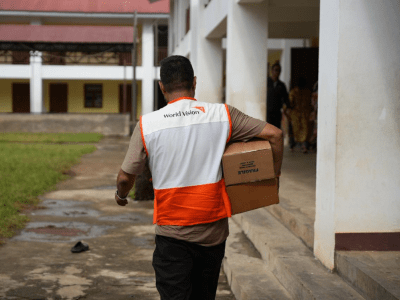
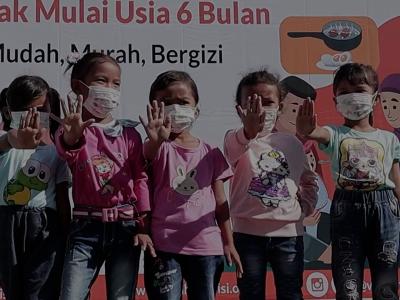
Following its recent commitment to emergency relief, Grab Cambodia is now actively deploying a massive wave of food and healthcare supplies to thousands of displaced families in Preah Vihear. The USD 120,000 Grab-funded initiative, implemented by World Vision, has moved into a critical delivery phase to address the prolonged hardship, support health services and provide targeted nutrition and non-food item (NFI) assistance for vulnerable women and children in affected communities.
publication / March 16, 2026
Annual Impact Report 2025
World Vision International in Cambodia’s 2025 Impact Report highlights a year of resilience, adaptation, and collective action amid significant humanitarian and development challenges. In a rapidly changing context shaped by sector‑wide disruptions and escalating border‑related conflict, World Vision Cambodia worked closely with government authorities, partners, communities, and donors to respond to urgent needs while sustaining long‑term development efforts. In 2025, World Vision Cambodia reached 5.4 million people, including 3.1 million children, nearly one third of Cambodia’s population. Humanitarian response remained a critical priority, supporting over 144,000 displaced people across 100 displacement sites, including children and people with disabilities, through life‑saving assistance such as water, sanitation, food and non‑food items, cash assistance, education, health and nutrition services, protection, and psychosocial support. Beyond emergency response, progress was achieved across education, child protection, WASH, nutrition, livelihoods, climate action, social accountability, and inclusive programming. The year also marked 55 years of World Vision’s long‑term commitment in Cambodia, reflecting sustained partnership and a shared vision for every child to experience life in all its fullness.
opinion / March 23, 2026
Finding the Missing Children of TB: Why Nutrition Integration Matters
Ending paediatric tuberculosis requires confronting two hidden crises: the underdiagnosis of children with TB and the separation of TB and nutrition.
opinion / March 19, 2026
Faith Communities: An Overlook Part of the Nutrition Systems?
Why achieving SDG 2 will remain out of reach unless formal nutrition systems recognise and integrate the actors already working on the frontlines.
publication / February 7, 2026
Annual Impact Brief 2025
World Vision Cambodia Annual Impact Brief 2025
publication / January 29, 2026
Faith Community Impact on Hunger and Nutrition
A global synthesis of Faith-Based Nutrition Dialogues highlighting how faith communities address hunger, malnutrition, and nutrition systems gaps.
publication / February 23, 2026
World Vision East Africa Impact Report 2025
Despite escalating conflict, climate shocks, economic instability and widespread displacement, we reached over 26 million people, including 16.4 million children
article / March 25, 2026
World Vision at HNPW 2026: Strengthening Hope, Protection and Lasting Impact for Children in Crisis
At the Humanitarian Networks and Partnerships Week (HNPW) 2026, World Vision demonstrated how child-centred, evidence-driven approaches can deliver greater impact, efficiency, and resilience at a moment when humanitarian needs are rising and resources are under intense strain. Across seven high-impact sessions, in partnership with UN agencies like WFP, FAO, clusters and networks like School Meals Coalition, Food Security Cluster and the Cash Learning and Partnership (CALP) Network, World Vision representatives helped shape global conversations on the Humanitarian Reset, bringing practical field experience, strong partnerships, and a clear focus on outcomes for children and communities.
publication / March 16, 2026
World Vision Rwanda Country Profile
World Vision Rwanda operates through a strong and sustainable framework that blends long-term community sponsorship, competitive grants, and support from global and regional networks. The sponsorship model provides a reliable funding base that enables consistent investment in child well-being, stronger community systems, and long-term development outcomes. This predictable support allows the organization to plan strategically, build lasting relationships with communities, and deliver sustainable, transformational impact across its programs.