
article / August 21, 2026
At the Frontline of Crisis and Recovery
From earthquakes to landslides, Nanda Budha reflects on leading humanitarian responses and standing with communities in crisis.

article / August 21, 2026
Standing with Children Through Crisis and Recovery
Having lived through the 2015 earthquake himself, Surendra Ratna Shakya has dedicated his career to supporting vulnerable children and families through crisis and recovery.

article / August 24, 2026
Storytelling Beyond the Headlines
Not all stories make the headlines. Through conversations with children and communities affected by crises, Binod Thapa Magar reflects on the moments that continue to shape his journey as a humanitarian storyteller.

article / August 20, 2026
In Nyiragongo and Masisi, 8,000 households regain prospects thanks to the Emergency Response project
This article highlights how World Vision’s Emergency Response project in Nyiragongo and Masisi is helping 8,000 crisis-affected households rebuild their livelihoods and regain hope. Through vocational training, income-generating activities and livelihood kits, women and families have gained practical skills, increased their self-reliance and strengthened their ability to meet their children’s basic needs. Their stories demonstrate how economic empowerment can restore dignity, resilience and confidence among displaced and vulnerable communities.

article / August 21, 2026
DR Congo: When War Overtakes Healing but Hope Prevails: The Story of GAKURU
GAKURU’s story illustrates the devastating impact of conflict and displacement on children facing malnutrition in eastern Democratic Republic of the Congo. After recovering from severe acute malnutrition with support from World Vision, two-year-old GAKURU was forced to flee with his family when violence swept through his village, leading to a relapse. Through continued nutritional support and follow-up care, he eventually recovered. His journey highlights the resilience of children and families living through crisis, while showing how World Vision’s Nexus Accelerator Fund continues to provide life-saving nutrition support in hard-to-reach and conflict-affected communities.

video / August 26, 2026
Ebola in the DRC: Why This Outbreak Is So Difficult to Combat
The Ebola crisis you remember was back in 2014 in Sierra Leone, Guinea, and Liberia. But the current one in the DRC is actually growing far faster than that one did.
Ebola has faded out of the news because there's been a lot of news to tell and limited time to tell it, but also because the story is hard to put into headlines. It's wrapped in complex layers of history, traditions, and systemic failure that have combined to make everything worse.
So Chirs Montgomery has put together this video to better understand what makes Ebola so hard to combat in the Democratic Republic of Congo.

press release / August 25, 2026
Nine Years of Struggle: Rohingya Children Caught Between Climate Disasters and Plunging Aid
Nine years into protracted displacement, escalating climate disasters and a 24% aid cut threaten 1.2 million Rohingya refugees, prompting World Vision to call for global responsibility-sharing and durable, nexus-driven solutions for children and host communities.

landing page / August 18, 2026
United Nations Office for the Coordination of Humanitarian Affairs (UNOCHA)
video / August 21, 2026
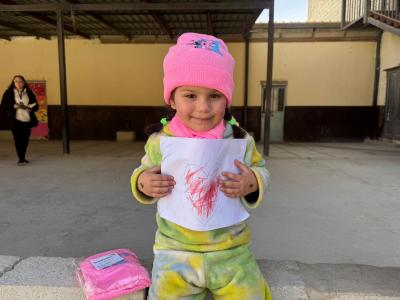
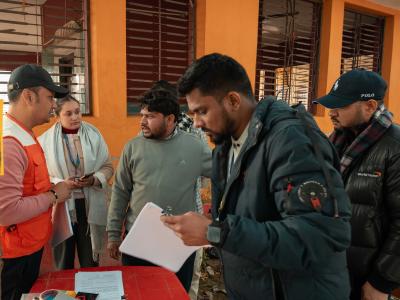
Fighting Cholera at the Doorstep: Community Action Saves Lives in Kolwezi
In Kolwezi, Lualaba province, the cholera outbreak is not only claiming lives in the hospital. It is also claiming lives in people’s homes, but silently.
Since December 2025, the Manika health zone has been facing a health crisis. But a genuine chain of solidarity has emerged. With support from World Vision DRC, through the NEPRF (National Emergency Preparedness and Response Fund), an internal emergency fund used to rapidly mobilise humanitarian aid during disasters, courageous community volunteers, such as Nicole, are going door-to-door to raise awareness, disinfect, distribute chlorine, and refer the sick to treatment centres.
The result? Over 7,000 people have been reached. More than 100 kg of chlorine has been distributed. Community mobilisation is our best weapon against cholera. Because saving lives starts with a simple act: informing to protect.